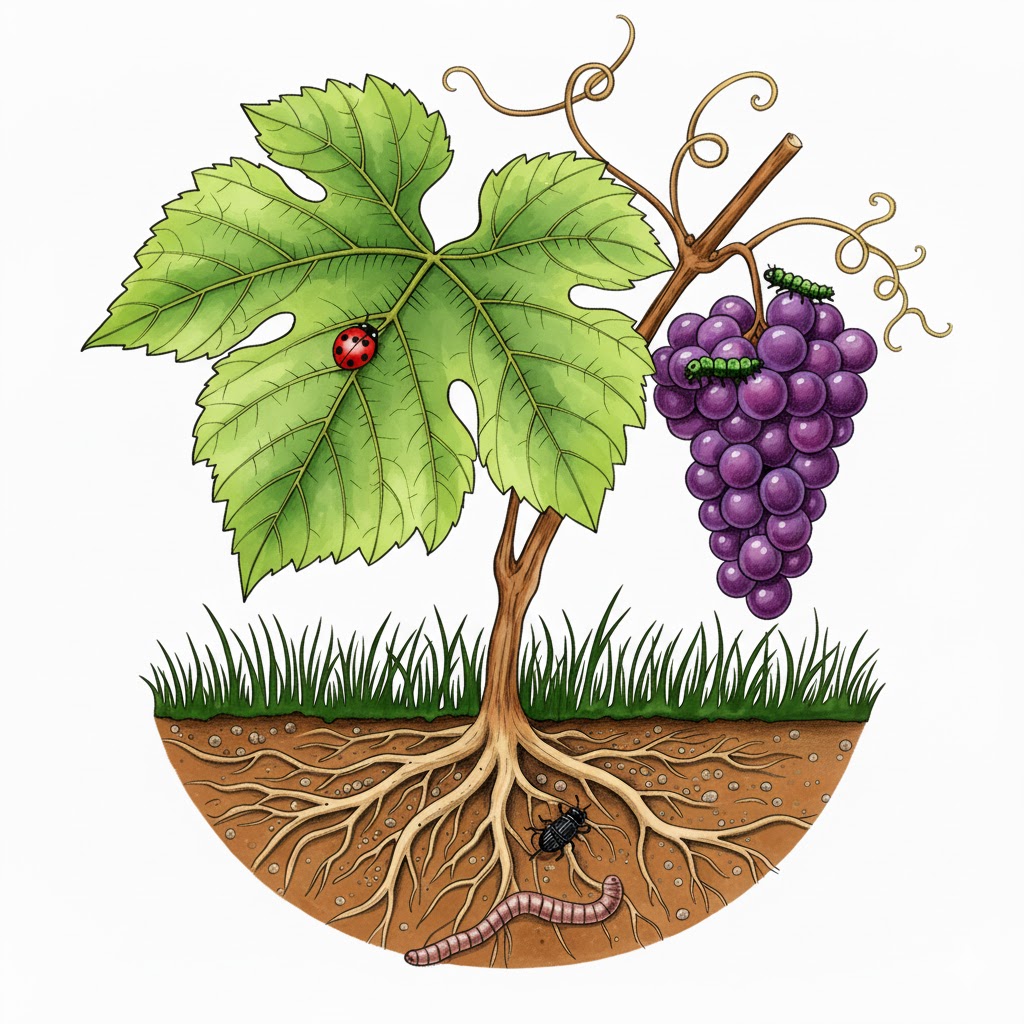
As part of the research work at the Biotechnical Faculty, we are studying the presence of harmful and beneficial species (primarily insects) in the inter-row space and the intra-row space (under the vines). Demonstration vineyards were selected in two wine-growing regions: Primorska and Podravje. In Primorska, we are examining the presence of harmful and beneficial species in a vineyard with semi-cultivated inter-rows (half of the inter-row space is grass-covered) and cultivated intra-rows, as well as in a vineyard with grass-covered inter-rows and a herbicide strip in the rows. In Podravje, for the same purpose, we selected two grass-covered vineyards: one with a grass-covered intra-row space, and the other with a herbicide-sprayed strip within the rows.
The abundance of soil pests is determined through soil sampling (excavation), while the abundance of above-ground pests—such as the brown marmorated stink bug, the European grape berry moth, and the vine moth—is monitored using pheromone traps, which are inspected at 7–14 day intervals during the growing season. To monitor the population of the American grapevine leafhopper, we use yellow sticky traps, also checked every 7–14 days. Additionally, pitfall traps are set in the vineyards to monitor other harmful and beneficial insect species. In both wine-growing regions, we track the abundance of above-ground beneficial organisms (ladybugs, lacewings, predatory bugs, predatory mites, predatory thrips, and pollinators) as well as soil-dwelling beneficial organisms (soil predatory mites, earthworms). Soil properties will also be analyzed in the vineyards. Our research will simultaneously employ several environmentally acceptable plant protection methods (pheromone baits, sticky traps, cover crops), all of which are permitted in organic viticulture. The results of our study will be applicable to the fields of biodiversity, agriculture, plant protection, and specifically to the sector of organic wine production